
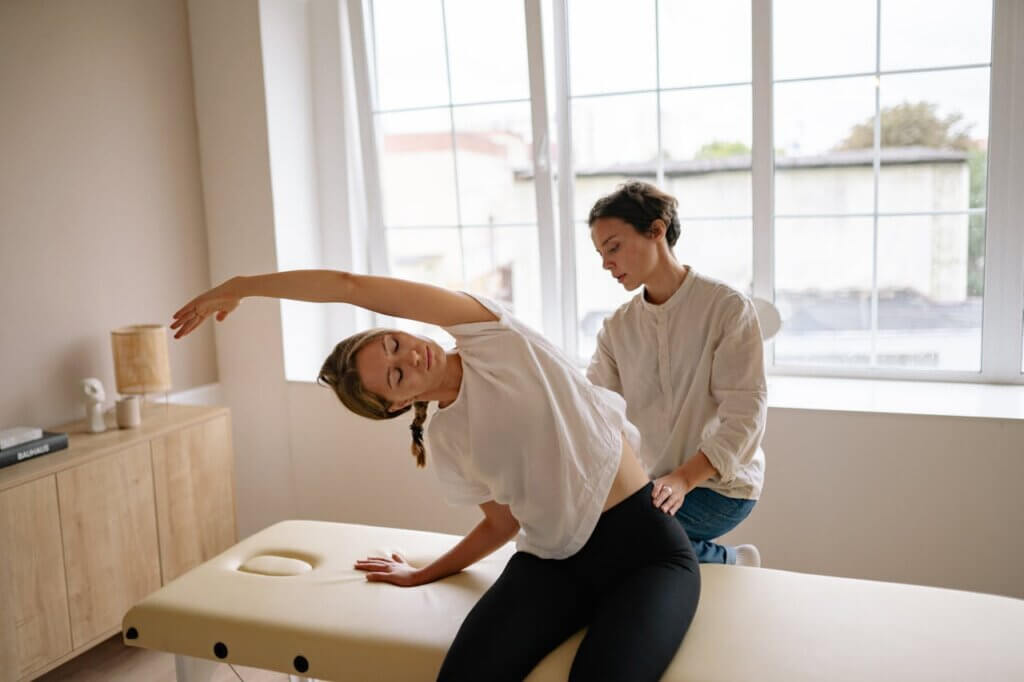
Physical Therapist Explains What It Does and How to Use It Correctly
A stretch circulating online, often referred to as the “model stretch,” has been gaining attention for its reported effects on posture.
The movement appears simple. Kneel in front of a bed, couch or chair, place the elbows on the surface, and lower the chest while the head drops between the arms. Many describe the position as relieving after long periods of sitting.
According to Aime Maranan, founder and lead physical therapist at Skillz Physical Therapy, the exercise is known in clinical terms as a thoracic extension.
“The name ‘model stretch’ is not a medical term,” Maranan said. “What people are doing is a thoracic extension movement.”
Why the Movement Affects Posture
Thoracic extension targets the mid-back region of the spine.
Maranan explained that the movement works by reducing excessive thoracic kyphosis, commonly described as a hunched posture. This change can influence other regions of the body as well.
“When the thoracic spine improves, it can also affect the lumbar spine and the position of the head,” she said.
The stretch places tension on several muscle groups, including the latissimus dorsi, teres major and minor, rhomboids, and shoulder extensors. These muscles can become tight with prolonged sitting, particularly when the arms remain at the sides for extended periods.
Reported Benefits Beyond Posture
This stretch engages multiple muscle groups including the latissimus dorsi, rhomboids, and shoulder extensors. These muscles often become tight from prolonged sitting or poor posture habits.
Regular movement may help:
- Improve upper back mobility
- Support better breathing mechanics
- Reduce stiffness in the shoulders and spine
- Assist with posture correction over time
These benefits make it a common component in rehabilitation programs, including those offered in physical therapy Skokie clinics for patients dealing with posture and spinal issues.
Use After Prolonged Sitting
The stretch is often described as relieving after desk work.
Maranan confirmed that response is common.
“Yes,” she said. “It can feel good after a long day of slouching.”
She added that the position is also used in cases involving thoracic disc issues and may assist with certain types of neck discomfort.
How to Perform the Stretch
Proper form determines how the stretch is experienced.
Maranan outlined the following steps for individuals without pain who are using the movement to improve posture:
- Kneel facing a chair or couch
- Place bent elbows on the surface
- Lower the chest toward the floor as far as tolerated
- Maintain a neutral neck position without bending forward
The stretch is typically felt through the triceps, shoulders, and upper back.
Frequency and Duration
There is no single way to apply the stretch.
Maranan recommends two common approaches:
- Short holds: 2 seconds, repeated 10 times, performed 5 times per day
- Longer holds: 20 seconds, repeated 3 times, performed 2–3 times per day
The choice depends on the individual and how they respond to the movement.
When Discomfort Occurs
Some individuals report discomfort when first attempting the stretch.
Maranan said this can happen when the thoracic joints are not accustomed to the position or when surrounding muscles are tight.
The recommendation is to stay within a tolerable range.
“Do not go to the point of torture,” she said. “Start with shorter holds and higher repetitions, then progress if needed.”
Why Posture Still Matters
Interest in posture often begins with appearance, but the effects extend beyond standing upright.
Maranan noted that improved posture can support breathing by allowing better lung expansion. It may also reduce strain associated with conditions such as neck pain, back pain, and certain nerve-related symptoms.
Other effects include improved muscle activation and reduced muscle tension.
“Posture also affects how a person presents,” she said. “It can change how someone looks and how they carry themselves.”
As the stretch continues to circulate online, its popularity reflects a broader interest in simple movements that address the physical effects of prolonged sitting. Whether used occasionally or as part of a routine, its impact depends on how accurately it is performed and how well it matches the individual using it.
Final Takeaway
The viral “model stretch” is a simple thoracic extension movement that may help improve posture and reduce stiffness from prolonged sitting. While it can be beneficial, it works best when combined with professional assessment and guided rehabilitation when needed.
For persistent symptoms related to posture or spinal strain, lower back pain treatments at Skillz PT guided by a licensed professional can help address the root cause rather than just temporary relief.